An outdoor kitchen in Leander has to earn its place. The ground fights back: limestone bedrock near the surface in places, shallow rocky clays on the ridges, and expansive blackland clay that swells and shrinks through the year. Add a summer that reaches about 99F design dry bulb and around 34 inches of annual rain, and the counter, footings and finishes all have to suit this ground. This service connects you with local Leander pros who quote the job, so you can compare plans before you commit.
Why this is different here
Leander sits on the eastern edge of the Edwards Plateau where limestone karst meets blackland clay, and that mix shapes every outdoor kitchen build. On the west and north sides of town, Georgetown and Eckrant soils are shallow, sometimes only 4 to 40 inches over indurated Edwards limestone, so setting a footing can mean cutting rock or drilling a pier. On the eastern blackland, Houston Black clay runs 40 to 60 percent clay, cracks 0.5 to 4 inches wide and stays open 90 to 150 days a year, so a counter base has to be designed for soil movement rather than load alone.
The climate tests finishes just as hard. Summer design is about 99F dry bulb and the UV index reaches 11 to 12 from April through August, which drives the choice of sealant, stain and cover. Rainfall averages about 34 inches, with May the wettest month, so drainage around the base and a plan for covering the counter both matter.
Leander also regulates the build. The City of Leander Development Services issues the permits and inspections, tree removal can require a mitigation plan, and the water utility keeps irrigation on a one day a week schedule in Phase 2. Local pros know how to sequence a kitchen around all of it.
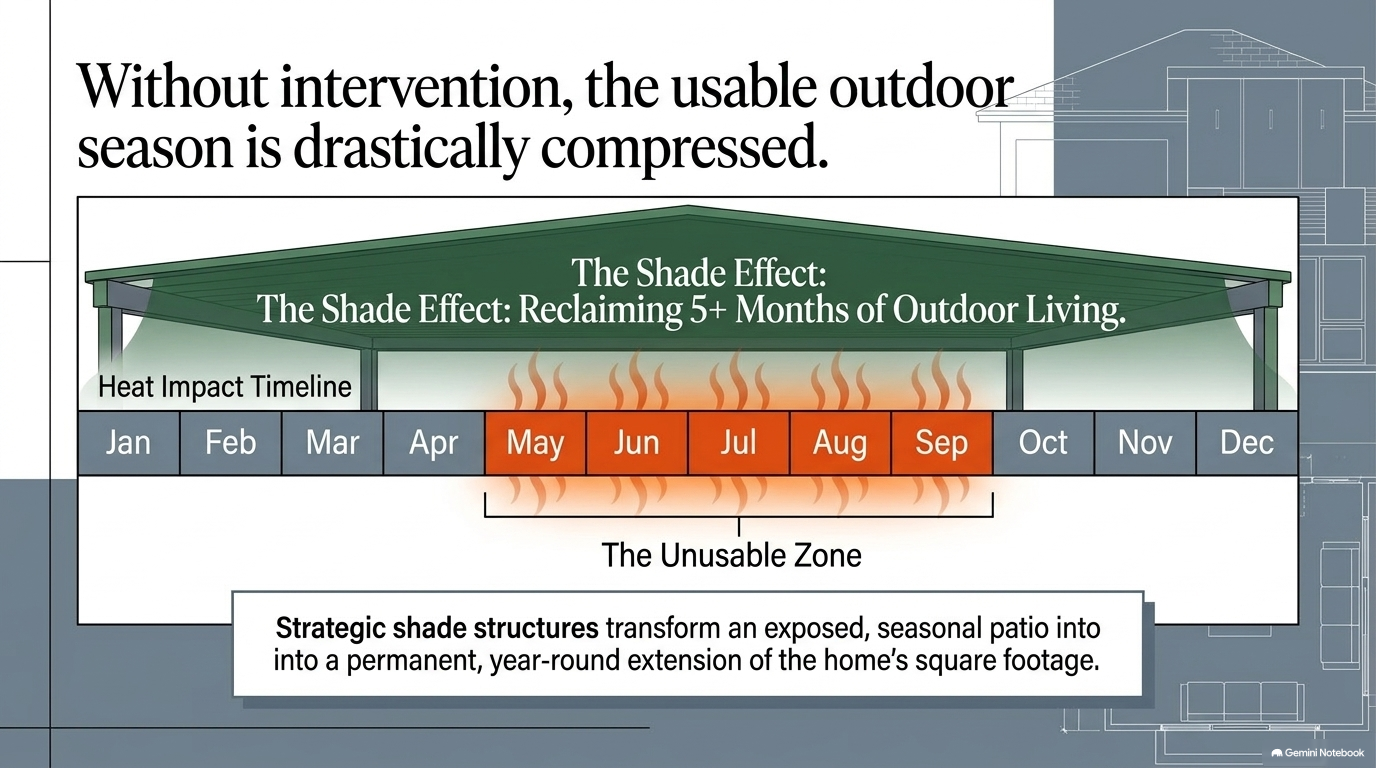
Summer is the other constraint. Average highs reach about 96F and the design temperature sits near 99F, with a UV index of 11 to 12 from April through August. That punishes cheap laminates and some sealers, and it makes shade over the cooking zone worth planning from the start. Rain runs 33 to 35 inches a year and May is the wettest month, so drainage under and around the counter matters as much as the counter itself.
The one-permit system shapes the schedule. The City of Leander requires every contractor and subcontractor on a single building permit before it is issued, and a kitchen often pulls in a mason, an electrician, a plumber and a gas fitter. Put them all on one application, and remember the permit expires if work does not start within six months.
How It Works
- Tell us about your outdoor kitchen construction project
- Get matched with up to 3 Leander pros
- Compare quotes and choose the best fit
Materials, Installation & Quality
Our matched Leander pros use professional-grade materials and techniques — proper site prep, reinforcement, control joints, and curing methods that stand up to local conditions. They do not cut corners, and they do not use substandard mixes or shortcuts that lead to early failure.
Local rules and permits in Leander
The rules below come from the town and county offices that issue the permits, and they change what a crew can start on and when. Ask any pro you talk to which of these applies to your lot before work begins.
One Permit for Every Trade
The City of Leander Planning and Development Services Building Inspection Division issues one building permit, and every contractor and subcontractor must be named on that single application before it is issued. An outdoor kitchen commonly brings a mason, an electrician, a plumber and a gas fitter, so coordinate them early. The permit is void if work does not start within six months.
Water Lines and Drought Stages
If your kitchen includes a sink, an ice maker or an irrigation line, the City of Leander Utilities Utility Billing office sets the watering standards that apply. Outdoor watering is allowed only on your designated day, before 10 a.m. or after 7 p.m., and Stage 1 through Stage 3 drought rules can tighten that. Check the current stage at 512-218-5460 before you plan a water feature or tap.
Drainage Fee on Counters and Patios
The City of Leander bills a stormwater drainage utility fee on impervious area, meaning asphalt, concrete, brick, stone and compacted surfaces, for every property inside city limits, even those with no other city service. A large counter, patio or concrete pad adds to that billed area. Design the drainage so runoff leaves your lot the way the city expects before you pour.
Protected Trees Over the Cooking Zone
Leander's protected-tree ordinance in chapter 8 of the Zoning and Development Code covers trees 8 inches DBH or larger, and on developed single-family lots only designated monarch trees are protected. Removal can still require replacement at 1:1 to 3:1 or mitigation at $150 per diameter inch. Check with the Building Inspection Division before you cut a live oak for a layout.
Common questions
Can I build an outdoor kitchen on Leander's clay soil?
Yes, but the footings usually have to go deeper than homeowners expect. Houston Black clay swells and shrinks enough to lift a counter built on shallow pads, so local pros normally carry the island on drilled piers or deep footings. That is a normal part of an outdoor kitchen here, not a sign of a problem.
Where can an outdoor kitchen sit in my Leander yard?
Accessory structures here go only in the side or rear yard, must clear setbacks, and cannot sit over any utility, drainage, water or sewer easement. They are also capped at 15 feet in height. Check your plat for easements before you pick a spot, because a built-in island over one usually has to be moved.
Do I need a permit for a built-in grill and counter in Leander?
Usually yes. The City of Leander Planning and Development Services Building Inspection Division issues the permit, and every contractor and subcontractor has to appear on one application before it is issued. Gas, electrical and plumbing work each fall under that single permit, and it expires if work does not start within six months.
Related Services in Leander



Ready to find a pro in Leander? Call (943) 888-0144 or fill out our contact form.