Outdoor lighting in Round Rock, TX is an electrical job before it is a design job. Long, bright summers, thin limestone in places and shifting clay above ground all affect how conduit and fixtures are set. This page covers trenching, voltage drop on long runs, GFCI protection outdoors and how long low-voltage LED fixtures last here. We do not build. We match you with local pros who quote your lighting, and you compare.
Why this is different here
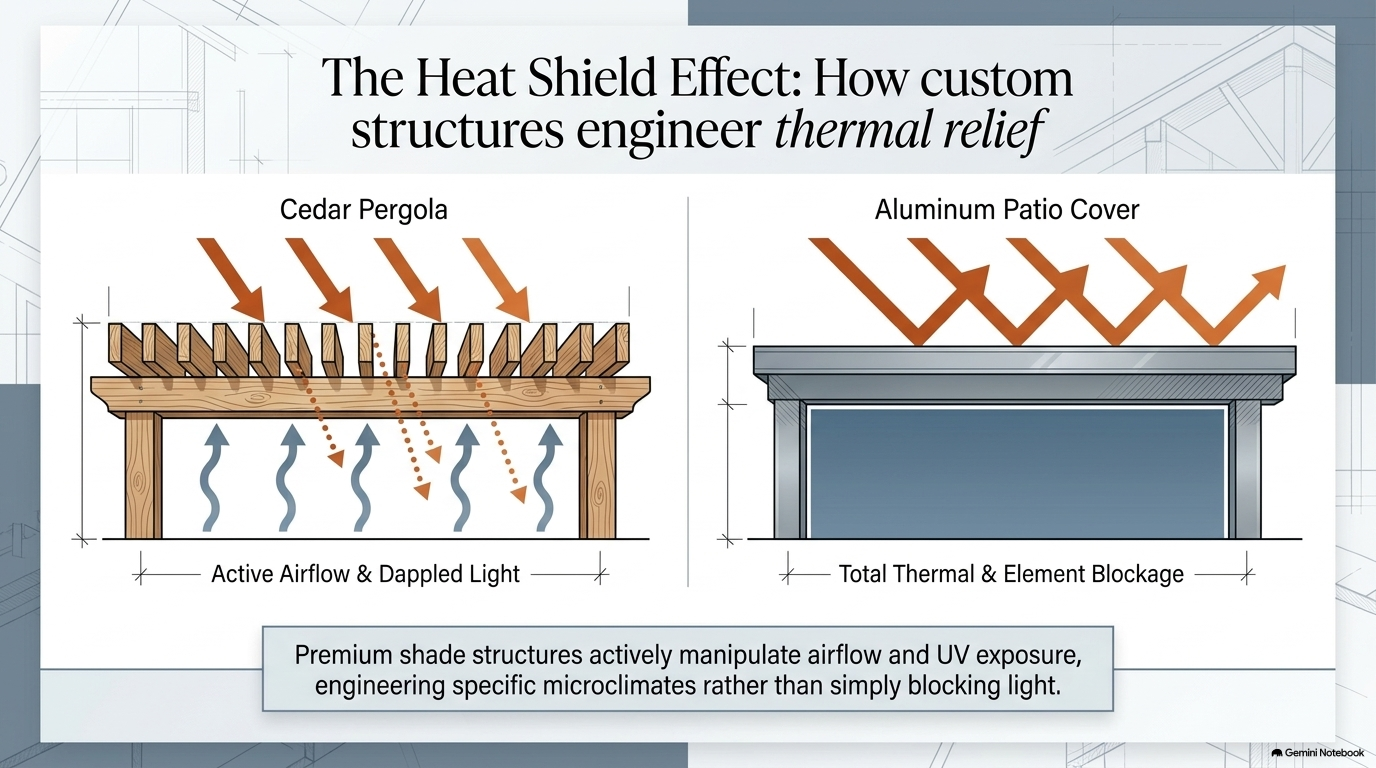
The sun is the local test for any lighting plan. With a UV index of 11 to 12 from April through August and the noon sun about 83 degrees above the horizon at the June solstice, shade is precious and evening light is in demand. Homeowners here often light a patio, a pergola and a path so the space stays usable after sunset. Texas live oak is the anchor shade tree, and its dense canopy makes uplighting it dramatic but also shades the fixtures themselves.
The ground complicates the trench. Houston Black clay cracks open up to four inches wide and shifts through the year, which can pinch or break a shallow cable run, and toward the west the Georgetown series puts only 20 to 40 inches of soil over hard Edwards limestone, with chert gravel at the surface. That means trench depth, conduit and granular backfill matter here more than in soft soil.
City rules apply. Electrical work falls under the City of Round Rock Planning and Development Services Building Inspection Division, and every contractor and subcontractor must be on a single building permit before it is issued. Conduit should stay out of any utility, drainage, water or sewer easement, and the 15-foot cap on accessory structures can limit lighting mounted on a pergola.
How It Works
- Tell us about your outdoor kitchen lighting project
- Get matched with up to 3 Round Rock pros
- Compare quotes and choose the best fit
Materials, Installation & Quality
Our matched Round Rock pros use professional-grade materials and techniques — proper site prep, reinforcement, control joints, and curing methods that stand up to local conditions. They do not cut corners, and they do not use substandard mixes or shortcuts that lead to early failure.
Local rules and permits in Round Rock
The rules below come from the town and county offices that issue the permits, and they change what a crew can start on and when. Ask any pro you talk to which of these applies to your lot before work begins.
Electrical Work Needs a Permit
The City of Round Rock Planning and Development Services Building Inspection Division issues the building permit, and every contractor and subcontractor must be named on one application before it is issued. Outdoor lighting, whether 120-volt or low-voltage, sits under that permit, and it is subject to inspection. The permit becomes invalid if work does not start within six months, so plan the schedule with your electrician.
Keep Conduit Out of Easements
Do not run conduit, junction boxes or transformers inside any utility, drainage, water or sewer easement. Round Rock does not allow accessory structures to encroach on easements, and lighting runs are treated the same way in practice because a utility may need to dig there. Ask the City of Round Rock Planning and Development Services where your easements sit before anyone trenches.
Protected Trees and Trenching
Trees 8 inches DBH or larger are protected under Round Rock's ordinance in chapter 8 of the Zoning and Development Code, and trenching near a live oak or cedar elm can damage the root zone. Oak wilt risk means oaks should be pruned only in the dormant cold or the hottest summer, with cuts painted. Check with the Building Inspection Division before you cut roots for a light run.
Lighting on Accessory Structures
If you want lights or a fan on a pergola, remember Round Rock allows accessory structures only in side or rear yards, clear of setbacks and easements, and caps them at 15 feet. Fixtures mounted high on a structure still have to respect that limit and any historic overlay review. Have the City of Round Rock Building Inspection Division confirm the plan before the electrician mounts anything.
Common questions
What voltage should outdoor lights use in Round Rock?
Low-voltage LED, usually 12 volt, works well for path and garden lights and is simple to adjust. Longer runs need a heavier gauge or a tap closer to the fixtures, because voltage drop shows up as dim lights. For anything mounted on a structure or run near a driveway, line voltage in conduit is often the better call.
Do I need a permit for outdoor lighting in Round Rock?
Yes for the electrical work. The City of Round Rock Planning and Development Services Building Inspection Division issues the permit, and every contractor and subcontractor must be named on one application before it is issued. The work is subject to inspection, and the permit expires if the job does not start within six months, so schedule your electrician early.
Will outdoor lights survive Round Rock summers?
If they are rated for wet locations and installed on GFCI-protected circuits, most do well. The bigger enemy is the soil and sun, not the heat alone: shifting clay can pinch shallow cable, and direct summer sun fades cheap housings. Quality LED fixtures with sealed housings hold up for years here, and a local pro can size the run correctly.
Related Services in Round Rock


Ready to find a pro in Round Rock? Call (943) 888-0144 or fill out our contact form.